
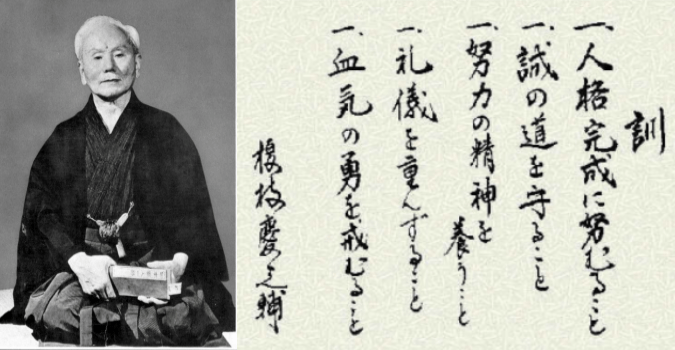
The Dojo Kun is more than just a set of rules; it is a five-point philosophical compass for every Karate practitioner. In a traditional Shotokan dojo, you will see these principles hanging on the wall in Japanese calligraphy. They are not just for decoration—they are chanted at the end of every session to remind us that the true battle is with ourselves.
If you are training with us online, understanding these five pillars is essential for your growth. Below, I’ve included a video demonstration of the Dojo Kun and a guide on how to perform the closing rituals so you’ll feel right at home if you ever step into a physical dojo.
The Five Principles of the Dojo Kun
1. To Seek Perfection of Character
This is the foundational goal of Shotokan. It emphasizes that Karate is a lifelong commitment to personal growth and moral development. We don’t just train to kick or punch; we train to become better human beings—striving for integrity and excellence in every aspect of life.
2. To Be Sincere and Honest
Derived from the Japanese phrase Makoto no michi o mamoru koto, this translates to “Protect the way of truth.” Sincerity isn’t passive; it’s an active defense of your integrity against ego and selfishness. In the dojo, this means your techniques and your interactions must reflect genuine effort.
3. To Show Strong Spirit
Seishin (spirit) is about mental resilience. It is the “never-give-up” attitude you cultivate through Kihon (basics), Kata (forms), and Kumite (sparring). As Gichin Funakoshi taught, a strong spirit is not about aggression—it’s about the inner strength to act with justice and self-control.
4. To Practice Courtesy
A true martial artist chooses peace over aggression. Courtesy includes the formal—bowing to your Sensei (instructor) and Sempai (seniors)—but also the internal: treating every training partner with dignity and humility.
5. To Control Bad Temper
True strength lies in composure. A person of character has the emotional mastery to walk away from a fight. We train our bodies to be dangerous so that our minds can remain peaceful, ensuring Karate is only ever used as a last resort.
Dojo Etiquette: How to Close a Class
When you visit a physical dojo, the end of class follows a specific ritual. Understanding these steps will help you move with the confidence of a seasoned student.
The Setup: Seiza (Formal Sitting)
The instructor will call for a line-up by rank. When the lead student calls out “Seiza!“, you will sit in the formal Japanese style:
- How to sit: Drop your left knee to the floor first, then the right. Sit back on your heels with your big toes slightly overlapping.
- Posture: Men keep knees about two fists apart; women keep them together. Keep your back straight, as if a string is pulling you up from the crown of your head.
- Hands: Rest your palms on your thighs, fingers pointing inward.
Mokuso (Meditation)
The lead student calls out “Mokuso!” (meditation). Close your eyes and clear your mind. This is a moment to reflect on your training. When you hear “Mokuso Yame!“, open your eyes.
The Chanting of the Dojo Kun
The lead student will recite each point of the Dojo Kun, and the class repeats them in unison. This is the moment we realign our spirit with the principles of the art.
The Final Bows
- Shomen ni rei: A bow to the front of the dojo to honor the founders and ancestors.
- Sensei ni rei: A bow to the instructor to show gratitude.
- To Bow in Seiza: Slide your left hand to the floor, then the right. Bow low without your forehead touching the floor, then return your hands to your thighs (right then left).
Standing Up
The Sensei will signal for everyone to stand. Students stand up one by one, starting from the highest rank at the beginning of the line to the end. Perform one last standing bow, and the class is officially over.
Note to Online Students: Practicing these rituals at home helps build the discipline required for the “real world” dojo experience. Don’t just learn the moves—learn the way.